In today’s competitive job market, your resume is often the first impression a potential employer has of you. Before a recruiter speaks with you, your resume helps them understand your education, skills, experience, achievements, and professional value. A well-written resume can open the door to an interview, while a poorly structured one may be overlooked within seconds.
But what exactly is a resume, and why is it so important?
What Is a Resume?
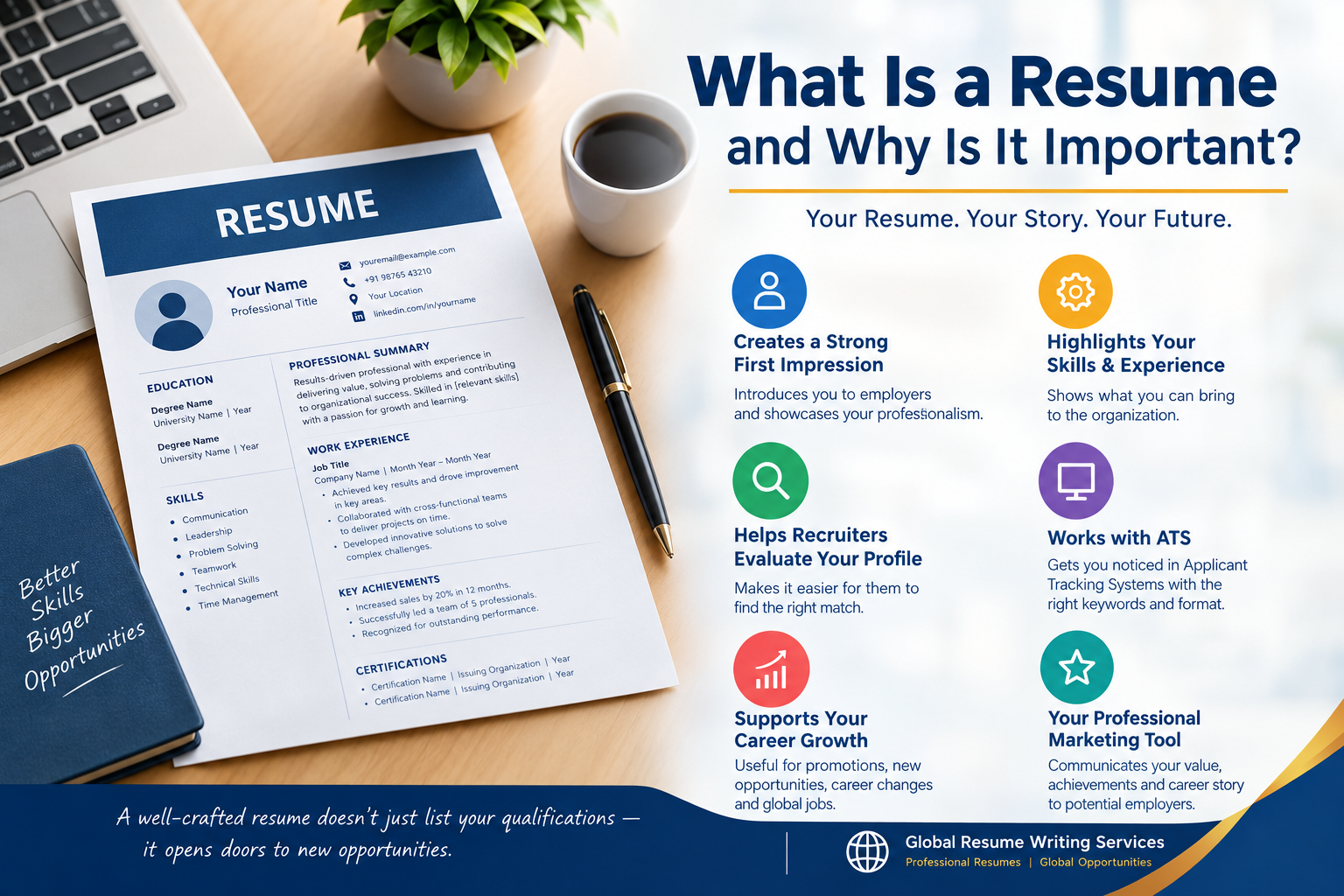
A resume is a professional document that summarizes your education, work experience, skills, achievements, certifications, and career qualifications. Its primary purpose is to present your professional profile to employers and demonstrate why you may be suitable for a particular job.
A resume is generally concise and tailored to the position you are applying for. Rather than describing everything you have done in your career, an effective resume focuses on the experiences and achievements that are most relevant to the target job.
Depending on your career stage, a resume may include:
- Professional summary or career objective
- Work experience
- Educational qualifications
- Technical and soft skills
- Professional achievements
- Certifications and training
- Projects
- Awards and recognitions
- Languages
- Relevant professional information
Why Is a Resume Important?
1. Creates Your First Professional Impression
Your resume introduces you to an employer before you get the opportunity to meet them. A clear, professional, and well-organized resume can communicate confidence and professionalism.
2. Highlights Your Skills and Experience
Employers want to understand what you can contribute to their organization. Your resume provides an opportunity to highlight your relevant skills, responsibilities, accomplishments, and professional experience.
3. Helps Recruiters Evaluate Your Profile
Recruiters often receive many applications for a single position. A well-structured resume makes it easier for them to quickly identify relevant qualifications and determine whether your profile matches the job requirements.
4. Helps You Pass Applicant Tracking Systems
Many organizations use Applicant Tracking Systems (ATS) to screen resumes before they reach recruiters. An ATS-friendly resume uses appropriate keywords, clear formatting, and relevant information to improve the chances of being identified during the screening process.
5. Supports Your Career Growth
A resume is not only useful when changing jobs. Maintaining an updated resume can help you prepare for promotions, international opportunities, career transitions, networking, professional certifications, and unexpected job opportunities.
What Makes a Good Resume?
An effective resume should be clear, relevant, accurate, concise, and professionally formatted. Most importantly, it should be customized for the specific position rather than using exactly the same resume for every application.
Instead of simply listing job responsibilities, focus on measurable achievements wherever possible. For example, rather than saying “Managed a sales team,” a stronger statement could explain how you increased sales, improved customer acquisition, or achieved business targets.
Final Thoughts
Your resume is more than a document listing your qualifications. It is a professional marketing document that communicates your career story and value to potential employers.
Whether you are a fresher entering the workforce, an experienced professional seeking career advancement, or a candidate applying for international opportunities, investing time in creating a strong, ATS-friendly resume can make your job search more organized and effective.
Dr. Avinash,
International Certified Resume Writer
PhD (HRM), MBA (HRM), MBA (Finance), MSc (Statistics) PGDHRM, DHRM, DIM, PGDIM, PGDIBO
Cell: 096658 80758